

Six Senate Democrats have given the Office of Personnel Management a September 25 deadline to respond to concerns that its medical claims collection on more than eight million FEHB and PSHB enrollees still lacks adequate privacy safeguards. The letter lists ten specific demands, including suspending the collection, shortening its 30-year retention period, and barring the data from ever being used in employment decisions. Here’s what the letter says, why lawmakers still aren’t satisfied with OPM’s safeguards, and what it means for you and your covered family members. more…
Recent Articles
The Fed’s Rate Hike and TSP Fund Returns — September 16, 2026
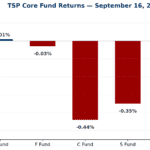
What the Fed’s rate hike meant for your Thrift Savings Plan more…
2027 CSRS / FERS / Social Security COLA Estimate

Fresh inflation data has forecasters pulling in different directions on the 2027 Cost-of-Living Adjustment. One major advocacy group lowered its estimate this month, while another raised its own — with two other independent forecasters landing lower still. See the range of estimates, what’s driving this summer’s inflation numbers, and what the outcome would mean for the both the CSRS and FERS annuity adjustments. more…
Should You Keep FEGLI Into Retirement? The 5-10 Year Review
If retirement is still five to ten years away, FEGLI probably feels like a solved… more…
Choosing the Right Life Insurance as a Federal Employee: Term, Whole, Universal, or Variable

Choosing a life insurance policy isn’t one-size-fits-all. In this column, Certified Financial Planner Ed Zurndorfer walks through how term, whole, universal, and variable life insurance each work, their advantages and drawbacks, and which type tends to make the most sense depending on a federal employee’s budget, health, and long-term financial goals. more…
How AI Workforce Changes Could Affect Your Retirement Date, Pension, and Paperwork

AI isn’t changing your FERS or CSRS pension formula. But if you’re approaching retirement, changes happening around your job could still affect the retirement plan you’ve been counting on — from promotion prospects and your future High-3 average salary to whether you reach your planned retirement date on the path you expected. Here’s where AI workplace changes could matter, and what federal employees nearing retirement should be watching now. more…
OPM Weighs Changes to FEHB Health Plan Options

OPM is asking whether the Federal Employees Health Benefits Program should offer more health plan options — or fewer. A new request for information, opens a 60-day comment period on how the number and type of FEHB and PSHB plan options affects premiums, consumer experience, and program costs. Here’s what’s actually being asked, and how to weigh in before the window closes. more…
TSP Week in Review: Sept. 7 – 11, 2026
A four-day trading week brought a rough stretch for most TSP investors, as escalating tensions overseas and a hotter-than-expected inflation report weighed on stocks. Every core fund but one closed the week lower, with one fund taking a noticeably steeper hit than the rest. See which funds held up, which one struggled most, and what next week’s Federal Reserve meeting could mean for TSP balances going forward. more…
How to Maximize Your 2026 TSP Contributions and Not Lose Agency Matching Contributions

Hitting the Thrift Savings Plan contribution and catch-up contribution limits too early in the year can still cost FERS employees their agency matching contributions. Ed Zurndorfer shows you how to calculate the right per-pay-date amount, whether you’re under age 50, ages 50-59, or in the age 60-63 “super catch-up” window. more…
2026 Thrift Savings Plan Maximum Contribution Limits

The Internal Revenue Service announced the cost-of-living adjustments affecting 2026 TSP contribution limits — as well as dollar limitations for traditional and Roth IRAs and other retirement-related items… more…