
Federal employees could get 12 weeks of paid leave to cover a serious illness, care for a sick family member, or handle military-family needs, under a bill Congress. more…
Latest Articles
The Medicare IRMAA Cliff: How a TSP Withdrawal Can Bite Back Two Years Later

A TSP withdrawal or Roth conversion can look harmless today — until it shows up two years later as a $2,300 Medicare surcharge. Here’s how the IRMAA “cliff” works, and the one move that can help you avoid it. more…
The TSP G Fund Is Safe From Market Losses — But Not From Inflation

The TSP’s G Fund protects your savings from market losses — its balance won’t decline when stocks fall or bond prices drop. But that protection doesn’t guarantee your savings will keep pace with inflation. When prices rise faster than the G Fund’s return, your account can hold more dollars while buying less than it used to. This guide’s analysis compares official G Fund returns with federal inflation data and examines the trade-off between market safety and long-term growth. It also considers how your retirement timeline, withdrawal plans and ability to tolerate market declines can affect the role the G Fund plays in your TSP. more…
Why 62 Is the Magic Age for FERS Employees to Retire

Age 62 can be an important turning point for FERS employees. If you retire at 62 or later with at least 20 years of service, the multiplier used to calculate your pension increases — potentially providing a 10% larger basic benefit. You also become eligible for Social Security and can begin receiving FERS cost-of-living adjustments without waiting. Chris Kowalik explains why these advantages may make 62 worth considering when choosing your retirement date. more…
Guide to Federal Retiree COLAs: What Are They and How Are They Calculated?

Ed Zurndorfer explains how CSRS and FERS cost-of-living adjustments are calculated, with 2026 numbers and real-world examples — plus how COLAs affect survivor annuities, and other federal employee death benefits. more…
Federal Retiree COLA History: CSRS COLA and FERS COLA

See every CSRS and FERS COLA since 1999, and how the two are calculated differently. more…
2026 Federal Holidays – Official OPM Schedule

2026 Federal Holidays: See the full OPM schedule, plus what’s ahead for 2027 and how holiday pay works if you’re scheduled to work. more…
Long-Term Care Costs Are Exceeding Americans’ Income: What Should Federal Employees Do?

A new report shows long-term care costs continue to rise, adding another financial challenge for federal employees planning to retire and federal retirees. While no one knows whether they’ll ever need extended care, understanding today’s costs — and what Medicare typically doesn’t cover — can help you make more informed retirement decisions. In our latest guide, Ed Zurndorfer explains the trends and provides some planning strategies to consider before these expenses become a reality more…
TSP Week in Review: July 20–24, 2026
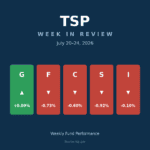
A tech-driven sell-off mid-week pulled most TSP stock funds lower, though a Friday rebound softened the losses. The S Fund led declines at -0.92%, while the G Fund was the only fund in the green, up 0.09%. See the full fund-by-fund breakdown and what drove the week. more…
FEHB Privacy: What OPM’s New Data Rule Means for You

OPM finalized a rule last month expanding the health claims data it collects from FEHB and PSHB insurance carriers — including more detailed prescription, provider, and billing codes. The agency states it needs to do this to catch healthcare fraud, waste, and billing abuse. While OPM states enrollees’ privacy is protected, the National Active and Retired Federal Employees Association (NARFE) has pushed back, saying the safeguard falls short of HIPAA’s standard. Here’s what’s actually collected, how it’s protected, and what critics still want changed. more…